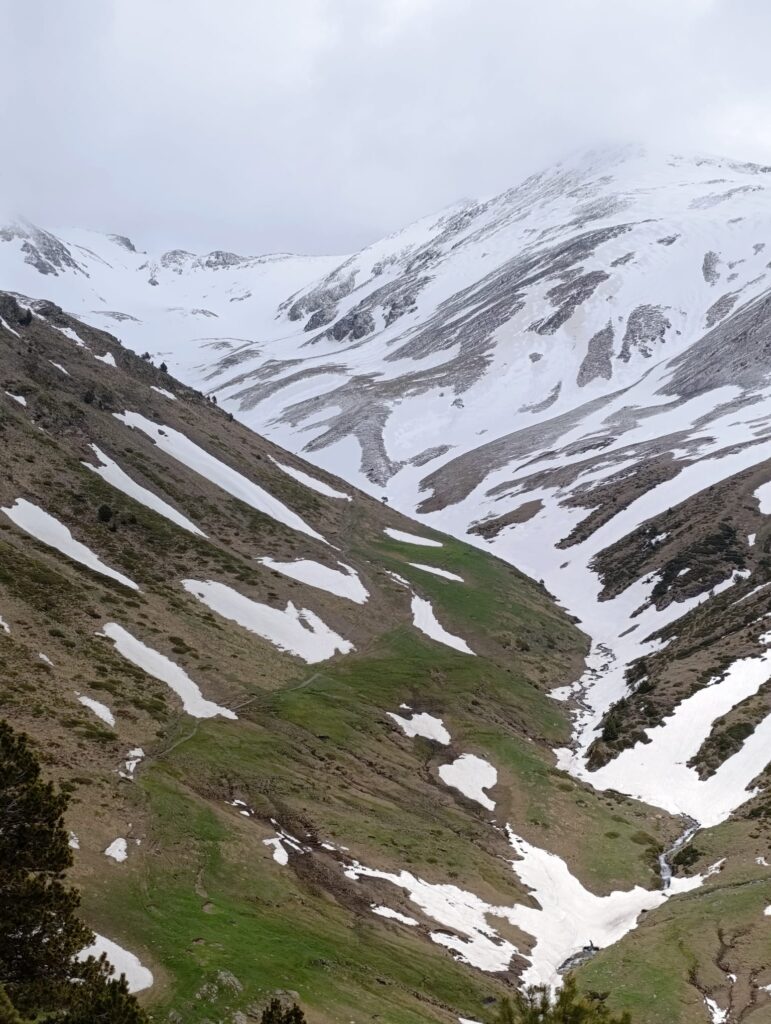


The weather hasn’t quite settled yet; we’re still having showers and the mountains are covered in snow once again. Even though these snowfalls are fleeting, we’re once again seeing the mountains blanketed in snow. The snow has settled more heavily where it was already present and has turned the rest white. It looks as though the weather will take a turn next week.
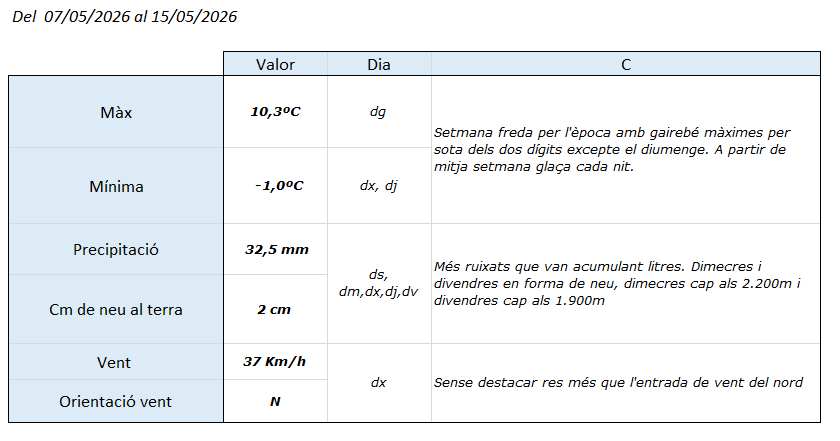
Summary of weather data at 2.000 m:
Forecast: (meteomuntanya.cat and @meteocattv)
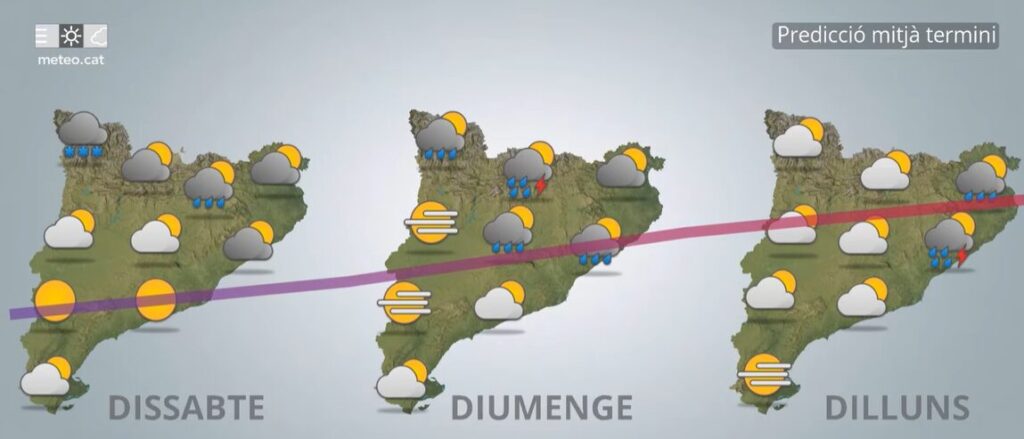
Unstable conditions, cold weather and strong winds prevail at higher altitudes.
Snowpack:
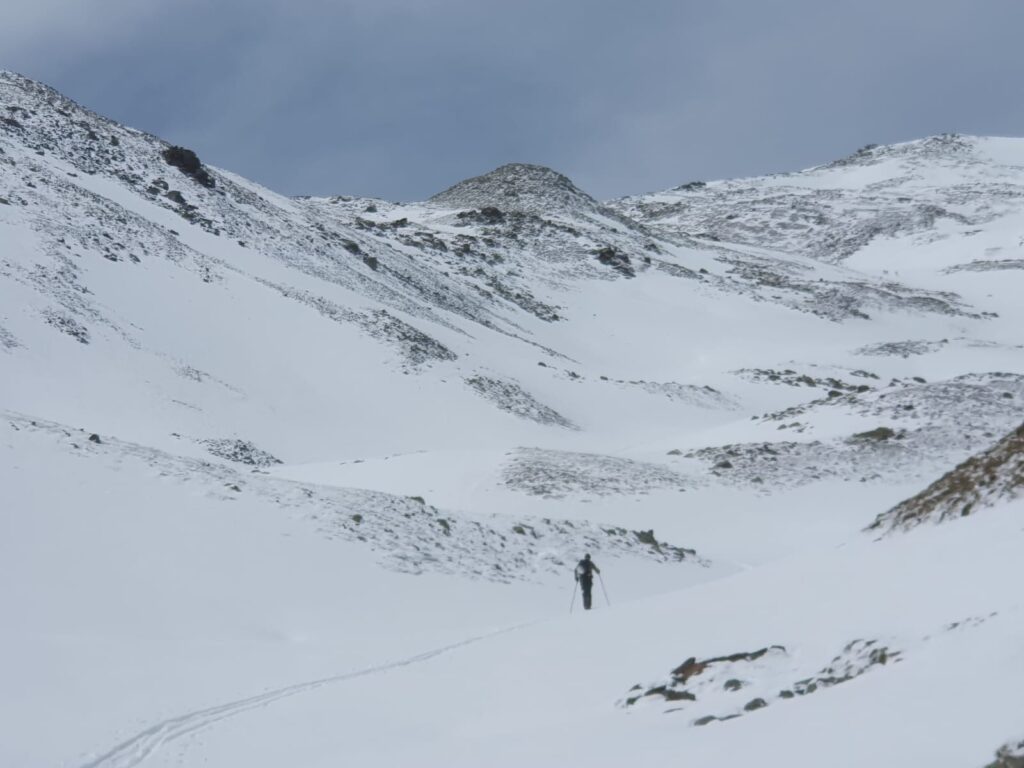
We haven’t found a continuous snow cover as such, but on north-facing slopes and above 2,400 metres, there is enough snow to plan routes on skis or snowshoes on the main peaks. The sun-facing slopes have patchy snowdrifts. Over the last few days, 10 cm of fresh snow has fallen at high altitudes, and this weekend a cold front is set to bring a little more snow and cause wind. All of this will mean that the surface layer of snow will be in very wintry conditions, with powder snow and patches of wind-drifted snow. From Monday onwards, we will quickly return to spring snow conditions.
Remember that spring snow poses risks in the morning due to the risk of slipping on hard snow and ice. However, once the sun hits it during the day, the surface layer melts, allowing for a pleasant ski. Whatever activity we’re doing—be it ski mountaineering, snowshoeing or mountaineering—we must carry the necessary equipment, such as an ice axe, crampons and a helmet. With such high temperatures, it’s best to set off very early to enjoy the snow before it becomes completely saturated and makes skiing difficult, especially on south-facing slopes and at lower altitudes.
Today, Friday, the risk level is 2/1 out of 5. We need to monitor the impact of the weather front in terms of wind-driven snow and any new snow slabs that may form. Next week, we will see a return to the risk of basal and snowmelt avalanches on south-facing slopes, particularly during the middle of the day or during heavy downpours. Please keep an eye on the information in the Avalanche Hazard Bulletin. Don’t forget to bring safety equipment, such as a shovel, avalanche transceiver and probe.
At this time of year, there are two main routes left for winter hiking. Firstly, the Coma de l’Embut route, where we’ll need to walk for 15–25 minutes to reach the Forat de l’Embut, from where the path continues all the way to the summit, apart from a few short, winding sections before crossing the stream.
The other route follows the Noucreus valley, which we can walk along for 15–25 minutes until just past the Pont de l’Escudé. From there, the snow line of the stream will lead us to the heavily snow-covered Noucreus slope, allowing us to cross over to the entire northern slope, which includes the Carançà valley, Coma de l’Infern, Coma de Vaca, Font Negra, and so on.
The route up Puigmal via Fontalba has some snowdrifts again, so you’ll need to carry safety equipment. Given the wind forecast for the weekend, this isn’t the best route for climbing Puigmal. The track may be blocked by snow over the final few kilometres.
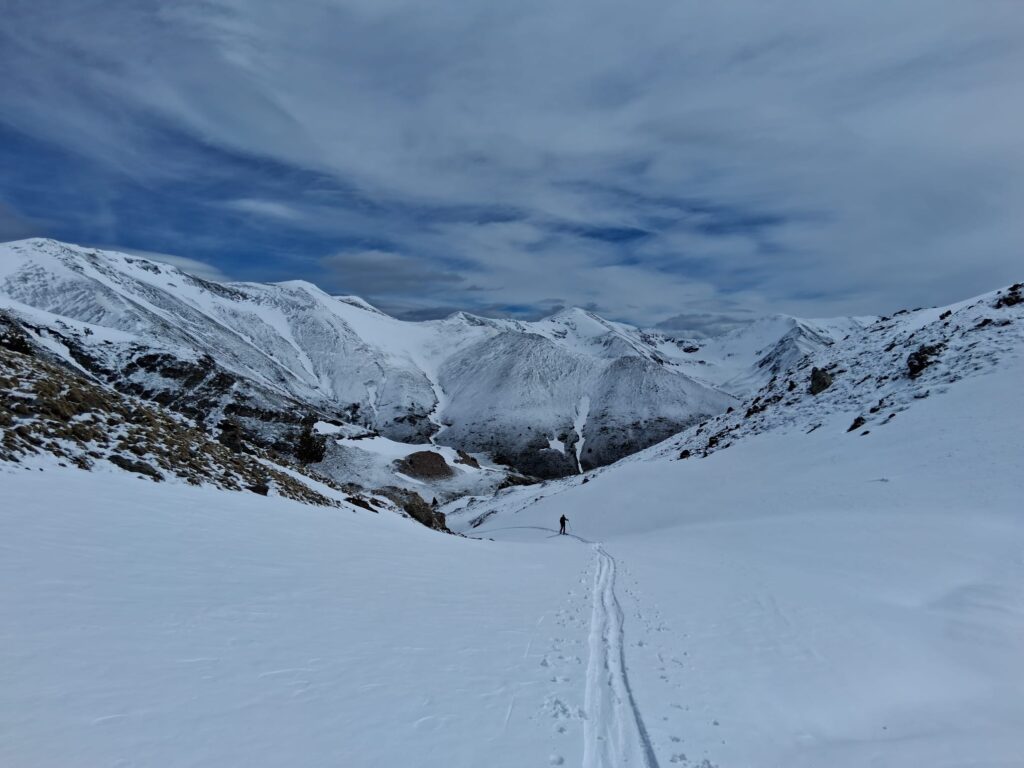
The path from Fontalba to Nuria is no longer difficult due to the lack of snow. However, you’ll need to be careful in case this weather front brings snow. Remember that the route is at an altitude of over 2,000 m throughout. Carrying crampons in your rucksack will solve any problems with unwanted slips. NOT RECOMMENDED for people without winter experience and the appropriate equipment. You will need to cross a gully with snow from a recent avalanche and a few trees felled by the wind.
The Camí Vell is now completely clear of snow. You can walk along it without any problems other than the usual mountain weather conditions. In a few places there are fallen trees that you’ll need to push aside.
Although there is no snow in sight along the Enginyers route, it is important to bear in mind that it crosses two narrow gorges where there is little sunlight. We will encounter remnants of snowdrifts that can make the passage very difficult. You must bring crampons and do not hesitate to put them on, however short the section may be. The steepness of the section leaves no room for error. NOT RECOMMENDED for people without winter experience and the appropriate equipment.