




A team led by the UAB and IPHES-CERCA has documented the site at Queralbs, the highest-altitude site with evidence of intensive human occupation known to date in the Pyrenees. The discovery reveals continuous human activity spanning more than 5,000 years and provides some of the oldest evidence of copper-rich mineral extraction in Western Europe.
For decades, archaeological research had regarded areas above 2,000 metres as marginal territories or areas of sporadic use. However, excavations carried out between 2021 and 2023 at Cave 338, located in Vall de Núria (Queralbs) at an altitude of 2,235 metres, have overturned this model. This site has become the most significant in the mountain range in terms of the intensity of its occupation, which took place in a planned and recurring manner between the 5th millennium BC and the end of the 1st millennium BC.
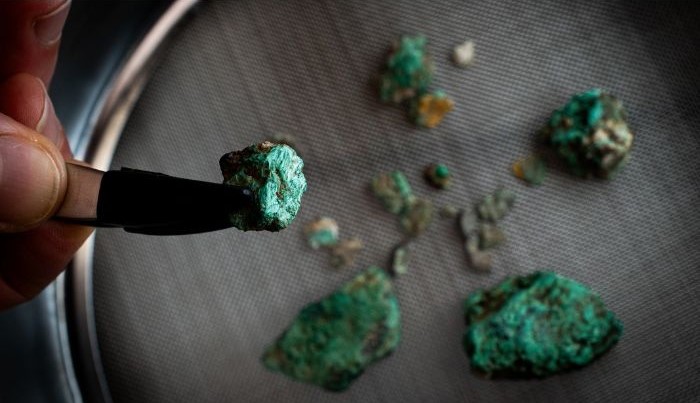
The finds inside the cave are of exceptional scientific importance. Fragments of malachite, a copper-rich mineral, have been recovered, placing the cave among the oldest evidence of mineral exploitation in Western Europe. Furthermore, items of high symbolic value have been found, such as pendants made from seashells and brown bear teeth, which demonstrate the complexity of the ornamentation practices of the prehistoric communities that inhabited these Alpine landscapes.
These findings suggest that the mountains were not a barrier, but rather an active territory that was integrated into the economic organisation of ancient societies. The researchers, led by Carlos Tornero (UAB) and Eudald Carbonell (IPHES-CERCA), interpret the cave as a key logistical hub within well-structured seasonal mobility systems. This demonstrates that human communities returned cyclically to the high mountains to carry out specific activities and make use of their resources.
The research forms part of the Arrels project, which focuses on the study of human occupation in the Alt Ripollès region. The work has been made possible thanks to the support of Queralbs Town Council and the Cabeceras del Ter y del Freser Natural Park, highlighting the rich cultural and scientific heritage of the region. The site has now been protected to ensure the preservation of this unique legacy, which helps us better understand our historical relationship with the Pyrenees.
Scientific reference
Tornero, C. et al. (2026). Beyond 2,000 meters, first evidence of intense prehistoric occupation in the Pyrenees. Frontiers in Environmental Archaeology. https://doi.org/10.3389/fearc.2026.1811493