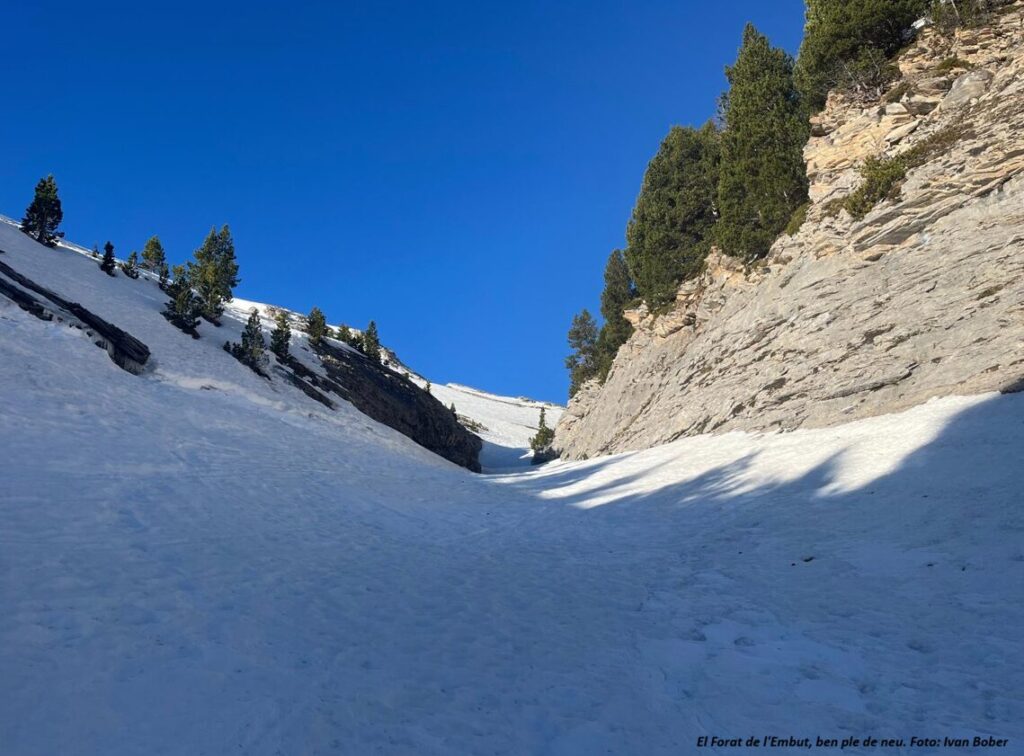


The snow from 2000 is gradually melting away as the greenery bursts into life; we are well and truly in spring. The snow lingers at higher altitudes, allowing us to enjoy winter conditions, and the first storms are beginning to hit the mountains.
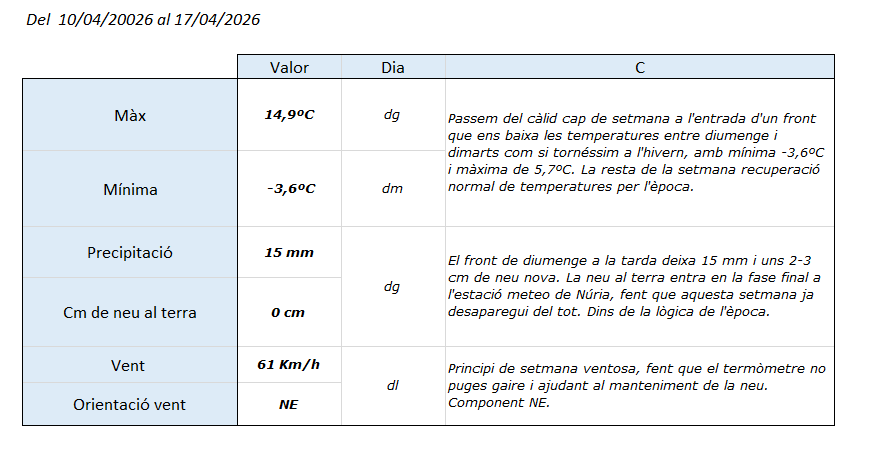
Summary of weather data at 2.000 m:
Forecast: (meteomuntanya.cat and @meteocattv)
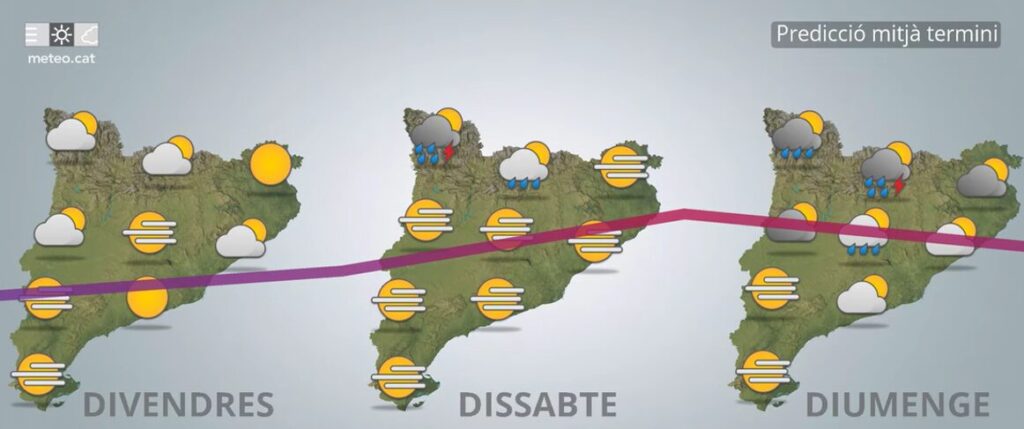
The weather front will move in on Saturday, and the first storms of the season may begin on Sunday.
Snowpack:
Last Sunday’s snowfall and the subsequent wind have left fresh patches of soft, heavy snow that needs to be transformed. Meanwhile, the old, dirty snow has become quite hard-packed. We’ll have to wait and see if the next few refreezing cycles transform it.
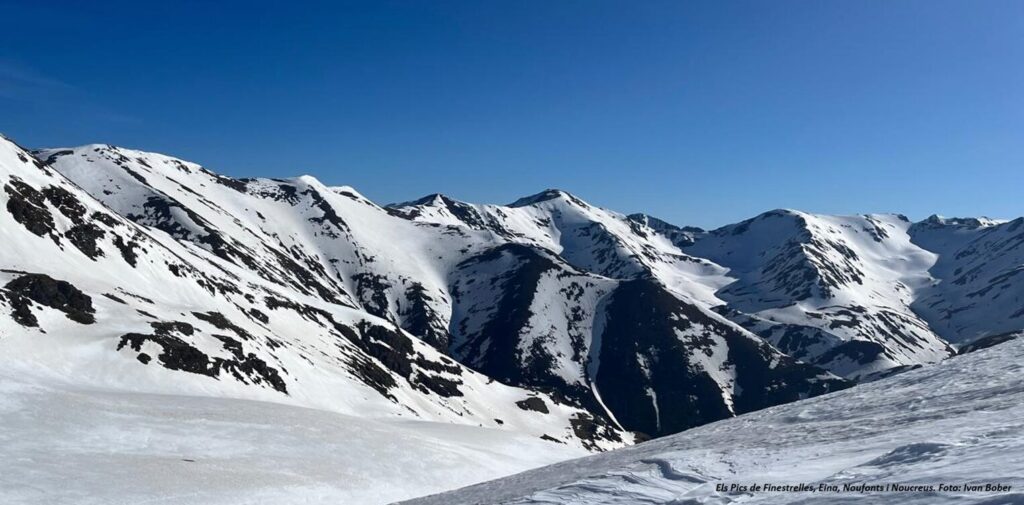
Remember that spring snow poses risks in the morning due to the risk of slipping on hard snow and ice. However, once the sun hits it during the day, the surface layer melts, making for a pleasant ski. Whatever activity we’re planning – be it ski mountaineering, snowshoeing or mountaineering – we must carry essential equipment such as an ice axe, crampons and a helmet. With such high temperatures, it’s best to set off early to enjoy the snow before it becomes completely saturated and makes skiing difficult, particularly on south-facing slopes.
Today, Friday, the risk level is 1/2 out of 5. This is mainly due to snowmelt avalanches on south-facing slopes during the middle of the day. Please keep an eye on the information in the Avalanche Risk Bulletin. Don’t forget to bring safety equipment such as a shovel, avalanche transceiver and probe.
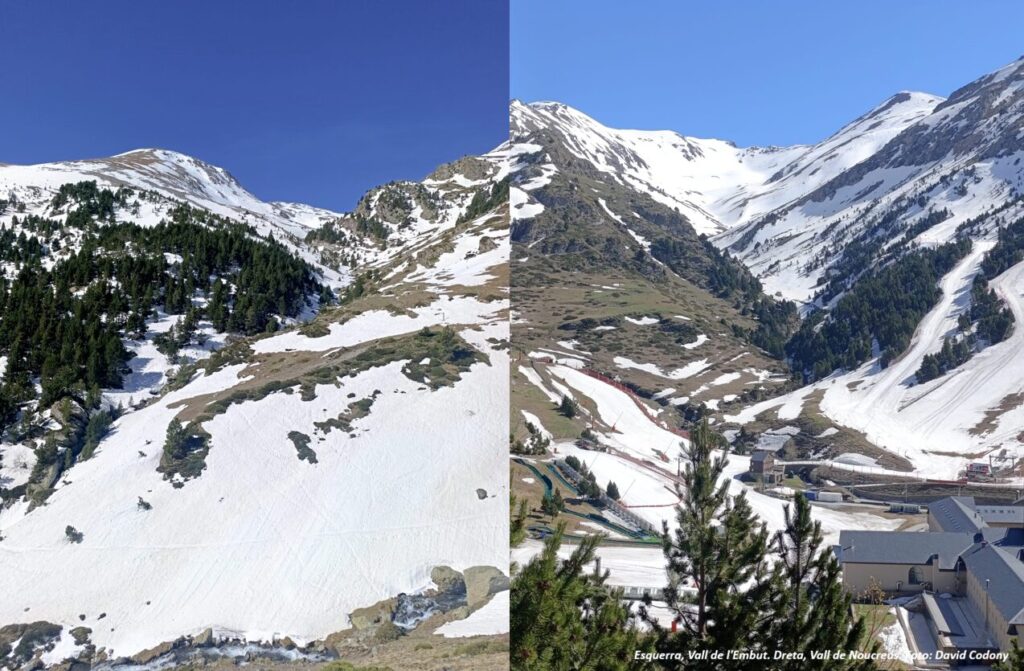
Despite the snow having melted at lower altitudes, it is still possible to reach the Embut and Noucreus valleys without taking off your skis. At the start of the Embut route, before the stream, you will need to make your way through the copse on the shady slope rather than the usual right-hand slope. In Noucreus, there are no problems. However, it is no longer possible to set off on skis or snowshoes from Núria to Eina and the Fontnegra area.
On the Camí Vell, there are some snowy sections starting from Pla de Sallent. Unless you pass through there early in the morning, the only problem you’ll face is having to go round the snowdrift – or trying to cross it carefully. Taking a pair of flexible, quick-fit crampons can help you tackle these short sections if you find them tricky. Recommended for those with winter hiking experience.
You can drive right up to the pass at Fontalba. Due to its aspect, the path leading to Núria is covered in snow for around 80% of the way. Depending on the time of year, crampons may be essential to ensure safe passage and avoid serious falls. This route is NOT RECOMMENDED for anyone without knowledge of avalanches and the appropriate equipment.
Although there is no snow in sight along the Enginyers trail, it is important to bear in mind that it crosses two deep gorges where there is little sunlight. We will encounter snowdrifts that could make the going very difficult.
You must bring crampons and should not hesitate to put them on, however short the section may be. The steepness of the terrain leaves no room for error. This route is NOT RECOMMENDED for anyone without knowledge of avalanches and the appropriate equipment.