


Spring has truly arrived! The calendar says so, the ever-changing weather confirms it, and the snow conditions are evident. It’s the perfect time to enjoy the mountains in winter, though not as harshly. However, it’s a highly variable season, with fronts and storms arriving that can create completely different conditions from one day to the next, with the snow in the morning and at midday bearing a striking resemblance to the snow on the same day.
Summary of weather data at 2.000 m:
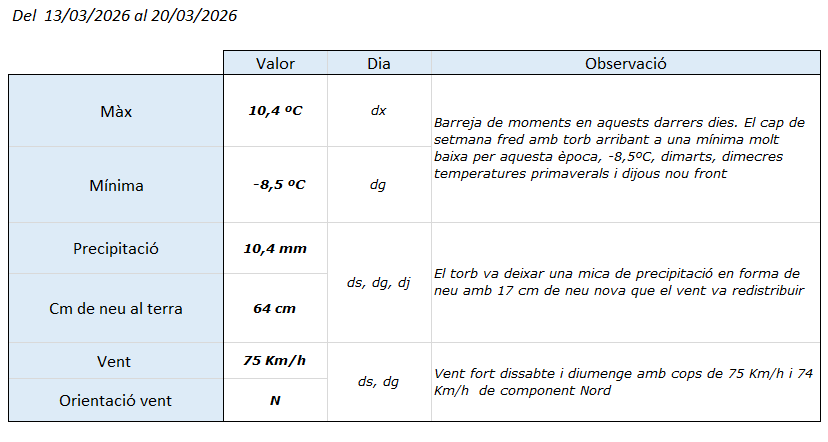
Forecast: (meteomuntanya.cat and @meteocattv)
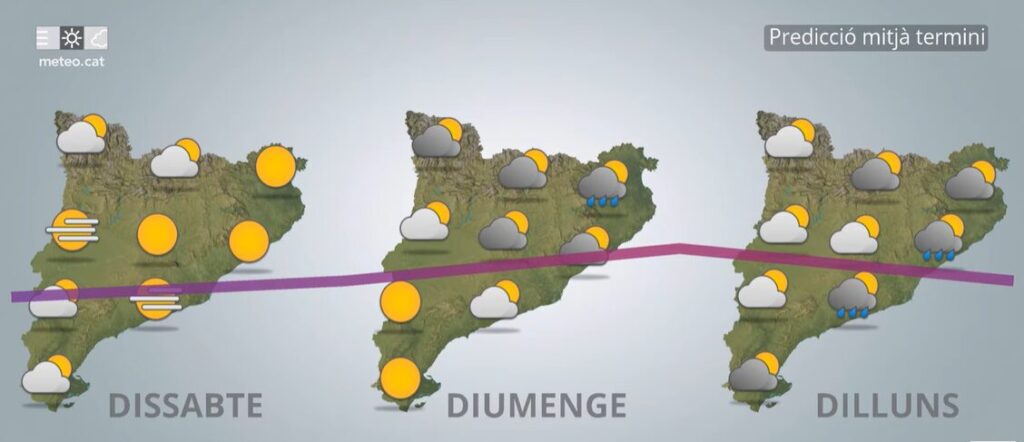
Saturday will be nice, Sunday at noon a new front will arrive until Tuesday, in principle without it having to be too remarkable.
Snowpack:
A spring week with 2-3 days of clear skies and one day of fog that have slightly melted the snowpack. There’s still a lot of snow for this time of year. Snow starts at 1,800 meters on the north-facing slopes and reaches about 2,000 meters on the south-facing slopes. There’s a snow depth of 65 cm at the 2,000-meter mark and more than 1.5 meters at higher elevations. Snow covers all slopes except for some south-facing slopes where it’s starting to melt and vegetation is beginning to emerge. There’s a wide range of routes to choose from, avoiding the areas mentioned. The north-facing ridges are bare.
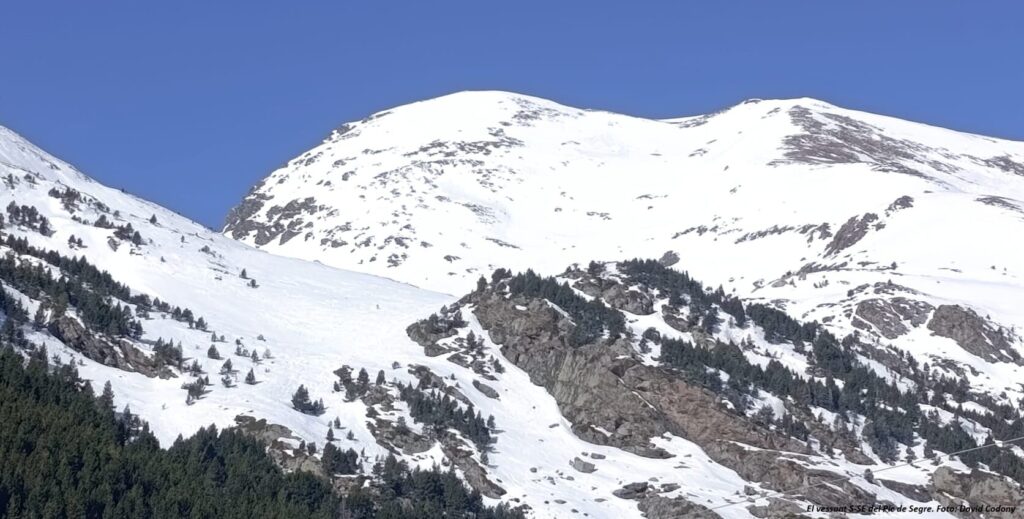
This week’s frosts have hardened the snowpack at lower elevations. Spring snow now predominates, which, as you know, poses risks in the mornings due to falls on hard snow and ice. However, once it receives daytime sunlight, the surface layer melts, allowing for pleasant skiing. Regardless of the activity we choose, whether it’s ski touring, snowshoeing, or mountaineering, we must carry the necessary climbing equipment, such as an ice axe, crampons, and a helmet.
Today, Friday, the risk is 2/5 above 2,300 meters and 1/5 below. This is mainly due to meltwater avalanches on south-facing slopes and during the middle of the day. We’ll have to see what the weather front does on Sunday in case new slabs form. Stay tuned to the Avalanche Hazard Bulletin. Don’t forget to bring your safety equipment, such as a shovel, avalanche transceiver, and probe.
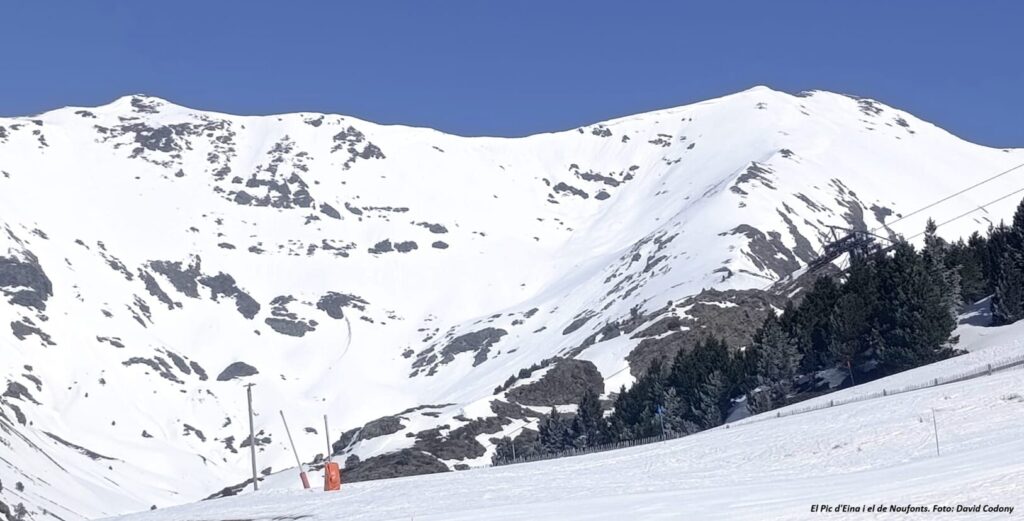
On the Camí Vell, we encountered snow starting from Pla de Sallent. The current accumulation of snow at the top of the trail means that early in the morning, conditions are difficult, with the path covered in icy snow, making even a small slip potentially leading to a fall with serious consequences. This route is NOT RECOMMENDED for people without proper equipment or winter experience.
Fontalba is almost accessible by car, right up to the top of the mountain pass. The path to Núria is suitable for mountaineering; safety equipment such as an ice axe, crampons, and helmet is essential. It is NOT RECOMMENDED for people without avalanche awareness and the appropriate equipment. This route is exposed to both natural and preventative avalanches, depending on snowfall and rising temperatures.
The Engineers‘ Path is covered in snow and is not recommended throughout the winter season due to areas where a slip could have fatal consequences.