


A radical change in the weather has occurred, going from a February storm with heavy snow and strong winds to almost summer-like conditions, with high temperatures and no frost at night. The snowmelt has accelerated dramatically, and snow depths are decreasing significantly. It appears that a new front will bring a more typical situation for this time of year over the weekend.
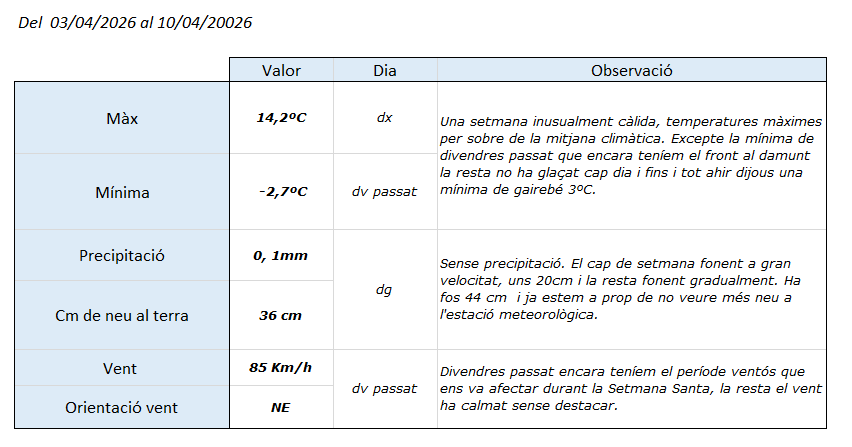
Summary of weather data at 2.000 m:
Forecast: (meteomuntanya.cat and @meteocattv)
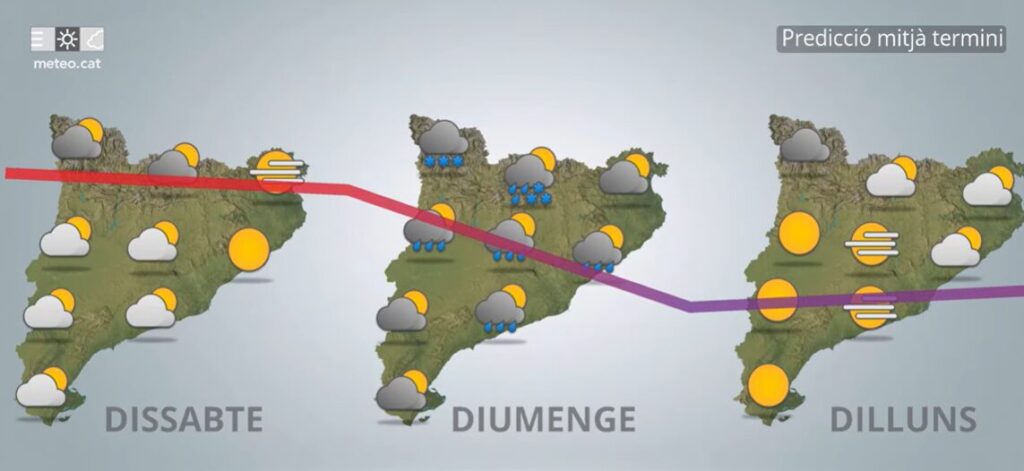
The front will move in on Saturday, and rain is expected to start on Sunday, followed by snow. Dust will be in the air, making the snow dirty.
Snowpack:
A dramatic rise in temperatures has melted much of the excess snow we had. The snow has already disappeared from Pla de Núria. Almost half a meter of snow has melted, which is to be expected at this time of year.
At higher elevations, after a week of winds that battered us with gusts exceeding 100 km/h, all the hills, ridges, and passes exposed to the wind are now bare. The southern slopes are now looking more like they should be at this time of year. Snow is continuous above 2,000 meters on the southern slopes and somewhat less so on the northern slopes.
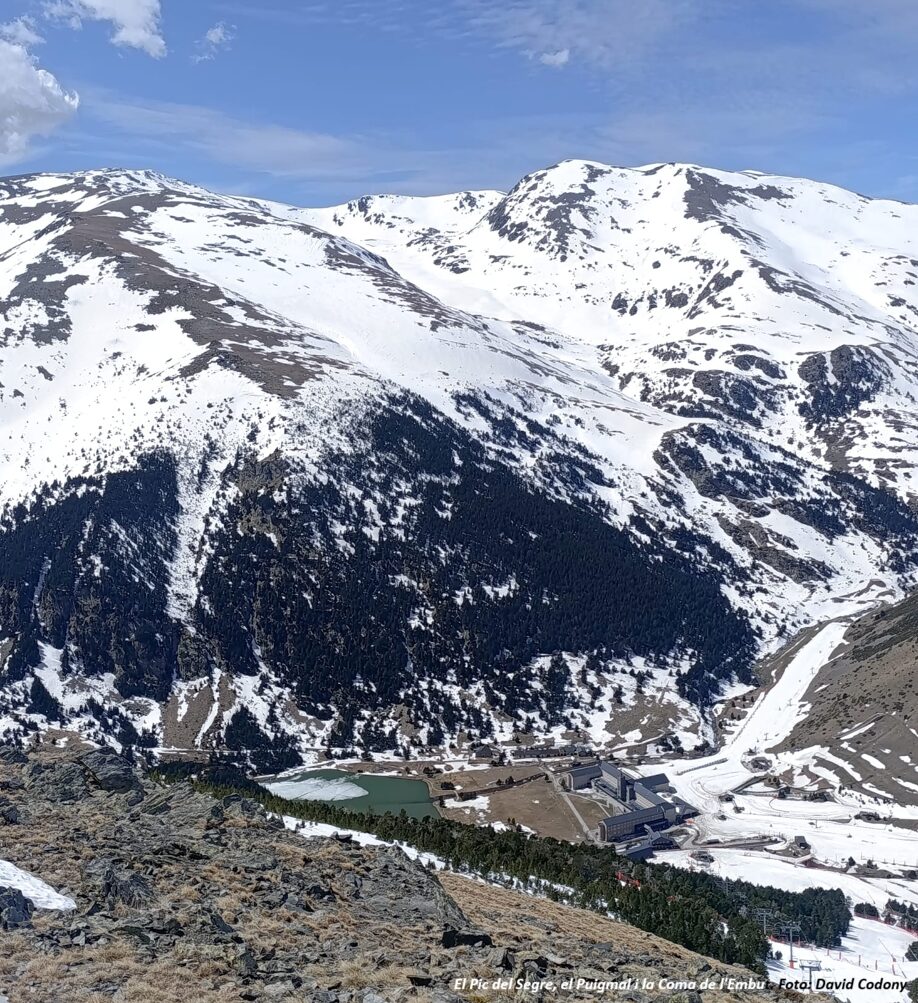
Spring snow predominates, which, as you know, poses risks in the morning due to falls on hard snow and ice. However, once it receives daytime sunlight, the surface layer melts, allowing for pleasant skiing. Regardless of the activity you choose—whether ski touring, snowshoeing, or mountaineering—you must carry the necessary equipment for progression, such as an ice axe, crampons, and helmet. With these high temperatures, you’ll appreciate heading out early to enjoy the snow before it becomes completely saturated and makes skiing difficult, especially on south-facing slopes. On north-facing slopes, you’ll still find hard snow.
Today, Friday, the avalanche risk is 1.5 out of 5, mainly due to meltwater avalanches on south-facing slopes during the middle of the day. We’ll have to see what the front develops on Sunday in case new slabs form. Stay tuned to the Avalanche Danger Bulletin. Don’t forget your safety equipment, such as a shovel, avalanche transceiver, and probe.
The main valleys remain accessible from Núria, and at higher elevations, most routes can be completed without difficulty. The area around the Torreneules pass is where the snow has melted the most, making it more challenging to establish a route with continuous snow cover.
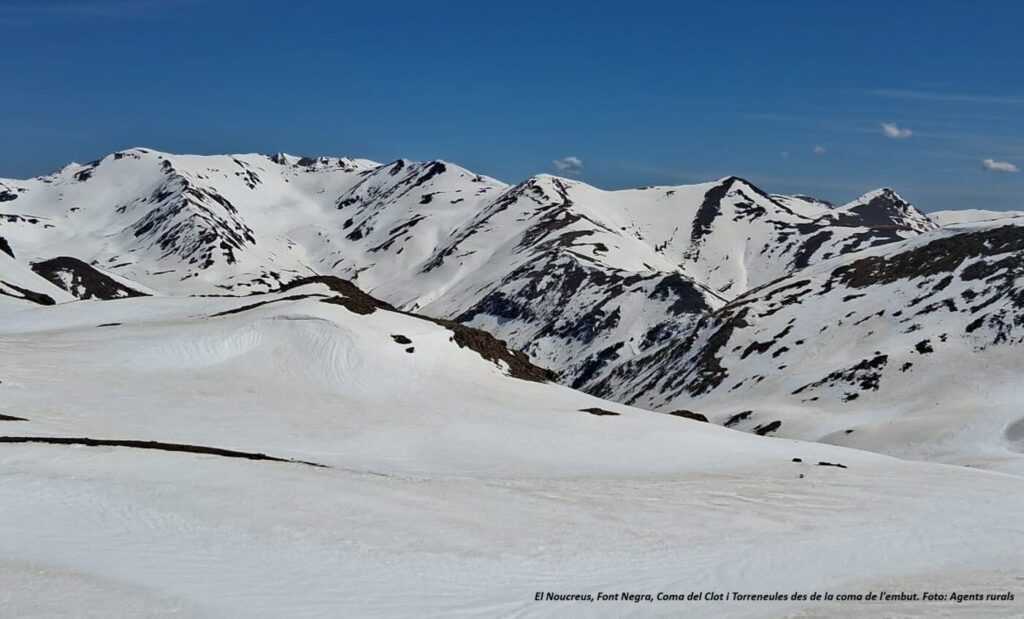
On the Camí vell we find snow starting from Pla de Sallent. The avalanches have become less continuous, and it’s no longer as dangerous to pass through. However, depending on the time of day, we may encounter icy snow with the risks that this entails. It’s best to wear crampons for safety, and this route is only recommended for people with winter experience.
At Fontalba, you can drive all the way to the pass. The path leading to Núria, due to its orientation, is suitable for mountaineering; it’s essential to carry safety equipment such as an ice axe, crampons, and a helmet. It is NOT RECOMMENDED for people without avalanche awareness and the appropriate equipment. This path is exposed to natural and preventative avalanches depending on snowfall and rising temperatures.
The Engineers‘ Path is covered in snow and is not recommended throughout the winter season due to areas where a slip could have fatal consequences.